Changsha Pump Output Rises as Retail Chain Model Grows
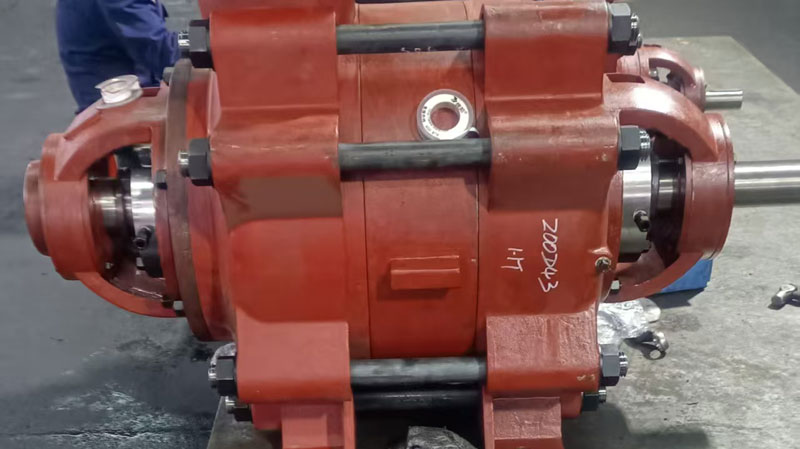
A water pump is a machine that conveys liquid or pressurizes it. It transfers the mechanical energy of a prime mover or other external energy to the liquid, increasing the energy of the liquid; it is mainly used to convey liquids including water, oil, acid and alkali liquids, emulsions, suspensions and liquid metals, and can also convey liquid-gas mixtures and liquids containing suspended solids. Technical parameters measuring pump performance include flow rate, suction lift, head, shaft power, water power and efficiency. According to different working principles, pumps can be divided into positive displacement pumps, vane pumps and other types. Positive displacement pumps use changes in the volume of their working chamber to transfer energy; vane pumps use the interaction between rotating vanes and water to transfer energy, and include centrifugal pumps, axial flow pumps and mixed flow pumps.
According to the data statistics in the article on the market situation, demand and suggestions for the pump industry published in the journal China Construction Information Water Industry Market, during the five years from 2003 to 2007 the domestic industrial sales value of the pump industry jumped from 7.7 billion yuan to 25.5 billion yuan, more than tripling; this is only the statistical data of member enterprises of the pump industry branch, while the figure from the National Bureau of Statistics that year was about 60 billion yuan. From 2008 to 2012, the national economic situation continued to improve, and the sales value of Changsha's pump industry doubled again. By the end of 2011, domestic demand for pumps had exceeded 140 billion yuan, of which the domestic industrial sales value of pump industry branch enterprises reached 62 billion yuan.
Against the background of continuously rising output value in the water pump industry, the integration of distribution channels is gradually taking shape, and the Changsha water pump retail chain model has emerged in response.
Relying on the advantages of their sales channels, chain operation companies first join hands with suppliers at all levels upstream. With the rapid expansion of sales scale and franchised stores, the sales of chain companies continue to grow and their demand for suppliers' products becomes greater, so they will obtain more preferential measures and support from suppliers, thereby securing more benefits for franchisees. The advantages gained in this respect cannot be obtained by stores operating alone. Whether in scale or in support from suppliers, chain companies have an overwhelming advantage over single stores, thus gradually advancing toward chain operation in regional markets. The expansion of market scale in turn can continue to expand upstream supply resources, making suppliers cooperate more closely with the chain company; cooperating with such a chain company means that the regional market share can be expanded rapidly without more investment, which is the result any supplier expects. At this point, the relationship between the chain company and suppliers becomes a win-win and coexisting one. Moreover, because suppliers have many options, a mature chain company can, through market operation, rapidly accelerate the expansion capability and production capacity of an ordinary manufacturer in a short time, which is a capability unique to chains. On the one hand, chain enterprises can collect various market information and customer feedback through their huge market reach and feed it back to manufacturers, thereby driving continuous product updating and technological innovation; on the other hand, through their huge sales capability they reduce manufacturers' investment in building sales channels, expand manufacturers' sales revenue, and promote the continuous expansion of suppliers' scale, enabling both parties to achieve sound development.
On the other hand, relying on the advantages of stores and services, chain companies drive consumer terminals downstream, satisfy customers' various needs, guide customers' consumption patterns and collect customer feedback, so that terminal customers grow rapidly and become stable and loyal. The resources obtained from upstream suppliers enable chain stores to maintain lower prices and high-quality service, thereby continuously winning more terminal customer resources. Rapidly increasing stores, uniform services and a good consumption experience continuously strengthen terminal customers' trust in and loyalty to chain companies, and word-of-mouth effects keep increasing. Eventually consumers recognize and become accustomed to the chain company's business model and consumption experience, realizing and satisfying customers' desire for consumption upgrading; this rise in consumer awareness will pose a severe challenge to the survival of single stores. In addition, the concept of taking users as the starting point for sales determines that chain companies have a very strong ability to lock in customers: once customers leave their original store, they will not come back. As long as such a sales channel forms a virtuous cycle, expansion will be extremely fast, and individual stores operating alone will be unable to compete, no matter how well the store was run in the past.
Therefore, the owner of a franchised chain store with very good performance in a certain region has this to say: the only competitor that can create a survival crisis for us is the entry of a future chain company. So we must turn the future competitor into ourselves first.
The water pump retail industry meets all the necessary elements for chain development, and chain operation has become the general trend of business. Dealers who lose the initiative and insist on operating alone will often end up being merged and absorbed by chain companies later, or changing direction and turning to other fields. The ten-year development of China's electrical appliance industry and hotel industry is an obvious precedent.